Complete 2,000–3,000W Off-Grid Solar Kits: What They Really Cost Once the Panel Is In
The short answer
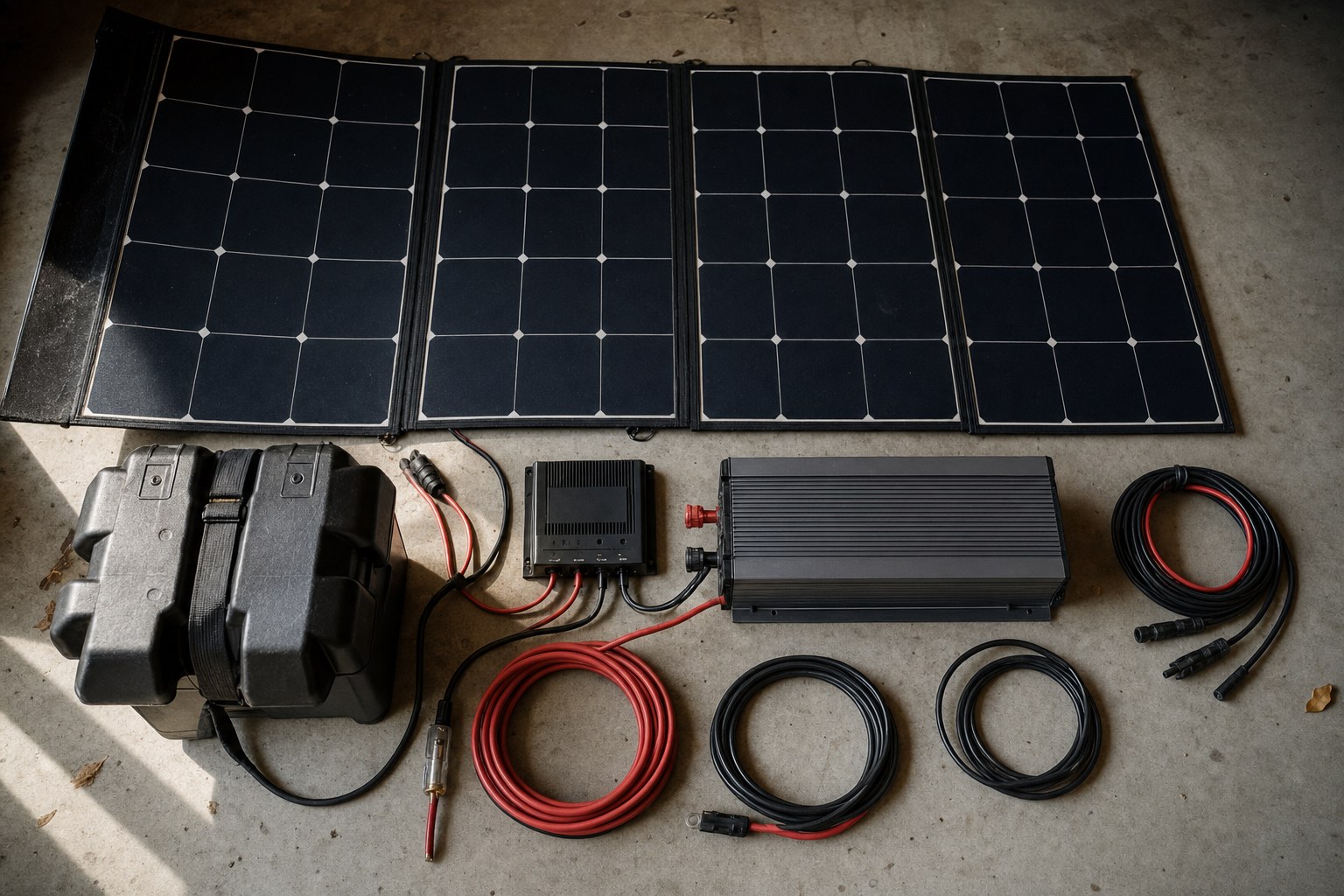
Cheap headline prices in the 2,000–3,000W class hide one line item: nearly half of these kits arrive as "main unit only," a battery and inverter with no solar panel attached. Nothing wrong with that if panels are already on your roof, but it is not an off-grid kit until you buy them, and 400–600W of solar usually runs $300–$600. Our catalog spells the gap out. The identical Anker SOLIX C2000 lists at $749 as a bare bank and $1,149 once a 400W panel is bundled in. That difference is the panel. We pulled the 33 LiFePO4 kits in this inverter class, ranked 5 of them by real off-grid price, and flagged which ones actually include the solar.
Where the 2–3kW class starts and stops
A 2,000–3,000W inverter is the one-room, small-cabin, serious-backup tier, and the wattage number by itself makes it easy to mis-buy. Comfortably inside its range: a fridge or chest freezer, lights, phones and laptops, a fan, a TV, and power tools in bursts. Outside it: central AC, an electric range or water heater, and a 240V well pump, all of which belong to the whole-home split-phase tier (the homestead systems guide covers that step up). Run your loads through the load calculator before shopping stickers.
Why the cheapest listing is usually a bank in disguise
Search "3,000W solar kit" and the bargains at the top of the results look unbeatable, right up until the phrase "main unit only" turns up in the title. A large share of this class ships with no panel at all: a battery, an inverter, and no way to refill either off-grid. Our catalog settles the point without arguing it. That same Anker SOLIX C2000 reads $749 bare and $1,149 with a 400W panel. The difference is the panel, and the headline price is where it goes to hide.
Two buyers can both be right here. (a) Panels already installed, shopping for the cheapest quality LiFePO4 bank: a main-unit-only listing is a legitimate bargain. (b) Going off-grid from scratch: buy a bundled kit, or add $300–$600 of panel to the sticker before comparing anything. Our ranking runs on that real off-grid price, not the headline.
Fridges and freezers surge hard and never turn off
Compressors pull 3–5× their running watts to start, and because they cycle 24/7 they quietly dominate your daily watt-hours — especially in summer heat. Modified-sine power makes them buzz and shortens compressor life.
Fix: Pure-sine inverter, and size the battery for the all-day cycling load. In hot climates add ~30% to the fridge's estimated draw.
One day of battery autonomy is thin for the critical loads you listed
You have loads that can't simply wait for sun — fridge/freezer, a pump, medical gear, or always-on connectivity. A single overcast stretch can take the bank to empty before noon.
Fix: Plan 2–3 days of autonomy for critical setups. Bump the "days of autonomy" input and re-check the battery size.
The 5 kits, ordered by real off-grid price
All five are LiFePO4 and pure sine inside the 2–3kW inverter band. The top three (#1 to #3) arrive complete with panels, so sticker equals off-grid price. The bottom two (#4 and #5) are main-unit-only banks, cheapest on paper until the solar goes in. The Jackery holds the most at 4,085Wh; the Anker owns the cheapest headline at $749, panel not included. The page's one buy link rides on the #1 complete pick. Every kit name opens its full audit, with real build cost and 6-month price history.
Sort yourself into a buyer type first. Panels already on hand, take the cheapest bare bank. Starting fresh, take a bundled kit. From there, run a head-to-head compare or browse the wider portable power pool.
#1 · Best complete kit for the money (panel in the box)
DELTA 2 Max 2048Wh + 400W PanelNothing left to finish. 2,048Wh of storage arrives with a bundled 400W panel at $899, $0.44/Wh. No asterisk on the headline: the sticker and the off-grid price are the same number, and it refills itself by day. For anyone buying into the 2–3kW class to genuinely leave the grid, this is the honest starting point.
#2 · Longest runtime, panels bundled
$0.48/WhStorage tops the class at 4,085Wh, and two 200W panels ship alongside it, which makes this a finished off-grid kit rather than a bare bank. $0.48/Wh and $1,979 put it above the #1 on cost, with nothing held back: it is sized to carry a fridge and lights through real use and pull the charge back from the sun.
#3 · The C2000 configured to work (panel included)
$0.56/WhSame 2,048Wh Anker C2000 as the cheap headline further down, except here the 400W panel that turns it into an off-grid kit rides in the box, at $1,149. Unless solar is already on the roof, buy it in this form rather than the bare unit plus a panel sourced later. This is the apples-to-apples off-grid number.
#4 · Cheapest sticker, main unit only
$0.37/WhLowest price in the class at $749 and the lowest cost-per-watt-hour at $0.37/Wh, and one fact explains both: no panel. Own solar already and this is a strong buy. Otherwise tack on $300–$600 for a 400–600W panel and the total lands back at bundled-kit money. The headline here is a bank price, not an off-grid price.
#5 · Low-cost name-brand bank, panel not included
$0.39/Wh2,048Wh of EcoFlow at $789, $0.39/Wh: another capable bank wearing a low sticker, and another main-unit-only listing. The rule repeats. Real value with panels already in hand, or when the job is grid-backup storage, but price the solar in before calling it an off-grid kit.
The receipt: what your money actually buys
No internal parts are missing from these units, so required missing-parts cost is $0. The line the listings leave out is the panel. A power station with no solar is a battery you refill from a wall outlet, not an off-grid kit. On the main-unit-only picks, add 400–600W of panel (≈$300–$600) to reach the honest off-grid price, which lands almost exactly where the bundled kits already sit. Autonomy figures below assume the loads run and the sun refills the bank.
| Kit | Listed | Storage | Fridge runtime, no sun | Days autonomy |
|---|---|---|---|---|
| DELTA 2 Max 2048Wh + 400W Panel | $899 | 2.0 kWh | ~26 hrs | ~1.1 |
| 2000 Plus + PackPlus E2000 Battery + 2x 200W Panels (4085Wh) | $1,979 | 4.1 kWh | ~51 hrs | ~2.1 |
| SOLIX C2000 Gen2 2,048Wh/2,400W | $1,149 | 2.0 kWh | ~26 hrs | ~1.1 |
| SOLIX C2000 Gen2 2,048Wh/2,400W + Main Unit Only | $749 | 2.0 kWh | ~26 hrs | ~1.1 |
| DELTA 3 Max – 2,048Wh / 2,400W + Main Unit Only | $789 | 2.0 kWh | ~26 hrs | ~1.1 |
Runtime ≈ usable storage ÷ ~80W effective fridge draw (running watts + inverter overhead, before summer derate). A real receipt for integrated stations is hours of runtime, not missing parts.
Finishing a bare bank: the parts list
Buying main-unit-only leaves one short shopping list between the box and off-grid:
- ◈Solar panels, with 400–600W the practical match for a 2–3kW / 2kWh-class unit: enough to put a meaningful charge back on a good day. Budget ≈$300–$600 for rigid or portable. Check the unit's max solar input voltage and wattage first so the array isn't overbuilt.
- ◈A matching cable or connector, since most units accept standard XT60/MC4 solar input. Confirm which one, and buy the cable if the box doesn't include it.
- ◈Nothing further. These are integrated systems, so once the panel is connected there is no separate charge controller, inverter, or wiring kit to chase. That is the upside of the class.
Re-check your own solar and runtime in the calculator, and see data sources for where our kit prices come from.
Buy now or wait?
| Kit | Current | 6-mo low | Above low | Signal |
|---|---|---|---|---|
| DELTA 2 Max 2048Wh + 400W Panel | $899 | $849 | +6% | Fair price |
| 2000 Plus + PackPlus E2000 Battery + 2x 200W Panels (4085Wh) | $1,979 | $1,979 | at low | Buy now |
| SOLIX C2000 Gen2 2,048Wh/2,400W | $1,149 | $1,099 | +5% | Fair price |
| SOLIX C2000 Gen2 2,048Wh/2,400W + Main Unit Only | $749 | $699 | +7% | Fair price |
| DELTA 3 Max – 2,048Wh / 2,400W + Main Unit Only | $789 | $789 | at low | Buy now |
6-month price history — DELTA 2 Max 2048Wh + 400W Panel
Price History
▼ 40% BELOW AVGLast observed at retailer: Jun 20, 2026. Days between observations carry the most recent known price — not new data.
Why these won — and why others failed
Why these won
- ✓Pure-sine LiFePO4 across all five, inside the 2–3kW band, and the top three arrive with panels, so the number on the listing is the number that runs off-grid instead of a bank still waiting to be finished.
- ✓Ranking runs on real off-grid price rather than the headline. Main-unit-only banks appear as what they are (a bargain with panels in hand, incomplete without), with the panel cost written into the total.
- ✓Prices, specs, and 6-month price trends come from live data, including the bundled-versus-bare listing of the same unit, which demonstrates the panel gap instead of asserting it.
Why others failed
- ✕Shopping the headline sticker. A 'main unit only' price is a bank price, and the panel it still needs usually eats the apparent savings whole.
- ✕Shopping inverter watts in isolation. No 2–3kW kit runs central AC, electric heat or cooking, or a 240V well, however low the price falls.
- ✕Sub-1kWh units are cut (too little storage to hold this class's loads for long), along with DC-only and non-LiFePO4 records, which have no place in a complete-kit comparison.
Frequently asked
Does a 3,000W solar kit include the panels?
Frequently it does not. Plenty of 2,000–3,000W 'kits' are main-unit-only listings: a battery and an inverter, no solar. Scan the title for 'main unit only' or for a panel wattage. If no panel is named, plan on $300–$600 for 400–600W of solar to make the thing genuinely off-grid, at which point a bundled kit tends to cost about the same.
What will a 2,000–3,000W solar generator run?
A fridge or chest freezer, lights, electronics, a fan, a TV, and power tools in short bursts. Call it the one-room, small-cabin, or serious-backup tier. Central air conditioning, an electric range or water heater, and a 240V well pump all sit outside it and need a whole-home split-phase system.
Is buying the power station and panels separately cheaper?
Rarely by enough to matter. Across this class, a bundled kit and a bare unit plus a comparable panel land within a hair of each other. The same Anker C2000 sits at roughly $749 bare and $1,149 with a 400W panel. Take the bundle unless panels are already yours or a specific panel is the point; the real saving in going separate is reusing solar you own.
Methodology, freshness & corrections
Cohort: LiFePO4 power stations rated 2,000–3,000W with 1 kWh+ of storage, a large share of them sold 'main unit only' with no panel → 33 kits clear the bar; the podium is drawn from the 18 clean, complete primaries left after dropping variants and incomplete listings. Prices auto-refresh from multiple retailers every 6 hours; this page last refreshed 2026-07-03.
See how real build cost is calculated, our methodology, data sources, and editorial policy. Found an error? Tell us — we correct fast.
Different use case? See the best off-grid solar generator for every load.